Sunday, November 5, 2023

Israel, Hamas, and the Palestinians.

For context, I was born in 1949, the year after Britain washed its hands of Palestine. I am not Jewish. I am a fourth generation American of Polish extraction with a Roman Catholic upbringing, though I am no longer a religious practitioner of any sort.

Here are the overriding salient points as I see them.

1. The Jews have been reviled for over two millennia, victims of bigotry, prejudice, and persecution, often with state sanction.

2. The Jews of Europe were abandoned by the world in the 1930s and 1940s.  As a result, six million of them—6,000,000 men, women, and children—were slaughtered by the Nazis. Even the United States turned them away from our shores. And the world powers of the era denied them the opportunity to go anywhere else, including Palestine. Their house was on fire and we locked them in.

3. The United Nations created the Jewish-Palestinian problem in 1948. The UN initiated an untenable situation and has been blaming Israel for it ever since. The UN handed the Palestinian Jews the shitty end of the stick and the Jews have been beating the Palestinians with that stick ever since, with the shitty end still in hand.

4. The Israelis have treated the Palestinians like others have treated them, with bigotry, prejudice, and persecution. The nation of Israel has applied an inverse corollary of the Golden Rule. It is not only despicable, it is not sustainable by just or peaceful means. The Hamas attack of October 2023 was only to be expected. Palestinian resistance to Israeli abuses are only to be expected.

5. As a consequence of the October 2023 Hamas terror attack and hostage-taking, Israel's only logical course is to destroy Hamas or, failing that, to create such an object lesson that the Palestinians will not permit the rise of such a terrorist agency again. Moreover, the majority of the Palestinians of Gaza are, at the very least, complicit in allowing Hamas to come to power. And while the Hamas attack may be understandable, given Israel's treatment of the Palestinians, it was purely stupid and self-defeating, except as a strategy to make Israel look bad while defending itself.

6.The Israel-Palestinian situation is a UN-created problem, a world problem. It needs a solution that is going to require more real estate than has been made available by the UN. The world needs to step up and pay for the mistakes it made.

7. The designated religious sites in Jerusalem should be under UN administration, with reasonable and equitable access guaranteed for all.

= ! =


Tuesday, July 18, 2023

Why a College Education should be "free" to students

In a nutshell

A college education has exactly the same purpose as that of the first twelve (or fourteen) years of public education: an educated populace benefits the United States of America.

The whole idea

It seems many citizens think that public education is for the benefit of children. WRONG! Public education is for the benefit of the public—the people of the nation at large—else there is absolutley no reason to pay for it out of tax dollars. And to cite the obvious, the reason public education benefits the nation is because educated citizens make better decisions in elections, get better jobs and pay more taxes, make better officers and enlisted members of the armed services, and contribute more materially, and in a wider variety of functions, to the strength and prosperity of the nation as a whole. With that understanding in mind, an eduction beyond those initial twelve to fourteen years provides significantly more benefit.

Some Disclaimers

1. Public education should be provided by public schools governed by the public. PERIOD. This includes college. Only state or similar publicly-run colleges and universities would be "free" to students. No vouchers, no tax breaks, none of that for non-public schools. If the public won't provide sufficient support for decent public schools, then they get what they pay for, but those public funds that are available should not be spent on private schools —that would be just bass-ackwards.

2. "College" would mean any manner of advanced education beyond the twelfth grade, including technical or trade schools, as long as they are publicly governed. To be more specific, publicly-governed means a generally-elected or government-appointed board of chancellors; it does not mean privately owned or a corporation with publicly-traded stock.

3. I would encourage "free" post-grauate education as well, but only in return for a period of public service, no less than two years, in the armed services, Peace Corps, Conservation Corps, Forest Service, Park Service, Bureau of Land Management, or other government-run, non-sectarian service dedicated to the public good.

In conclusion

Public education is not free. For students, it's a full-time job, paid in educational credits. For the public, it's expensive, at least if it's done right. The education of young people is an investment in our own personal safety and security. America can only be great if its citizens are well educated.

= ! =

Sunday, July 9, 2023

Critical Racism Theory

Critical Race Theory: well, yeah, but no. Not to say that Ron DeSantis and his ilk are not douchebags of the first order, but I think Mr. DeSantis owes his rabidly anti-CRT position not so much to racism but more to the endemic sociopathy necessary to win votes in our political system. It's not so much that CRT is barking up the wrong tree, it's more that CRT adherents can't see the forest for that tree. And while DeSantis and those like him deliberately prey on people's fears, that is because we humans are so susceptible to being afraid. Fear brought us to the evolutionary stage we occupy today.

The problem with Critical Race Theory, for all its purported truth, is that it likewise engages the fears of many, many white people who are rooted in the systemic racism that grips us all. Please note: I am not saying that CRT is wrong, or bad, or a lie. What I am saying is that, while CRT may be a body of critical knowledge, it is quite obviously not an effective tool for winning the hearts and minds of frightened human beings. Marching under its banner may earn one kudos from the other members of the marching band, but it ain't gonna convince the parade-goers to march along. In fact, waving that flag in people's faces fans the flames that warms the cockles of DeSantis's and Trump's and McConnell's campaign coffers.

Accusing people of racism is not the way to counter or diminish racism. What needs to be confronted, and what I have yet to see addressed, is that all human beings are inherently racist -- and sexist, and ageist, and everything-else-that-is-different-from-me-ist.

Look around: the history of humanity is a tapestry of people identifying with others of their own kind: their own family, their own religiosity, their own gender, their own age, their own ethnicity, their own guild, their own every damn thing. Moreover this is due to an innate survival strategy that has human beings hard-wired by evolution to be fearful of those different from ourselves. Come to that, homogeneity is pretty much the strategy of every species on the planet. Shouting at people that their evolved organic personality structure is wrong or evil will be as effective as shouting at them to change the color of their eyes. It is no one's "fault" that he, or she, or non-binary pronoun of choice is racist. It is what it is. 

That is the challenge we face: overcoming an inherent vice that is still an evolutionary imperative. Until we deal with that, all we are doing is barking up trees.

= ! =

Wednesday, March 29, 2017

And the Epitomite goes to ...

The Epitomite
No heart, no brain
Congratulations to Mick Mulvaney, Director of the Office of Management and Budget. Mr. Mulvaney, at the behest of his leash holder, Donald Trump, himself an Epitomite awardee, has proposed and defended a hard-hearted and self-defeating budget which claws through the soul of America and spits at the rest of the world.

Mr. Mulvaney has established a reputation of mean disinterest and callous disregard that will follow him throughout the remainder of his career and molder as his legacy. It is with the deepest disdain that this award is discredited to him.
OMB Director Mick Mulvaney
Them eyes ain't smilin'.

= ! =

Monday, March 20, 2017

Iffy shades of gray


The nouveau-powerful and their hangers-on in Washington seem to share certain personality traits that mark their openly immature style of governance, a style about which many seem to be pleased. And it's quite possible, maybe even likely, that these denominators are the result of organic brain physiology. In other words, trying to change their minds is a fool's errand.

I'll be more specific.

One common idiosyncrasy among these Republican atavists is the inability to appreciate nuance. For this crowd, issues tend to be understood as simple, straightforward, at-face-value. Bad is bad, good is good, white is white, black is black and there are no shades of gray. This point of view lends itself to a feeling of righteousness and a tendency to discount others' opinions. No matter the extra baggage or special circumstances that may be attached to any given matter, it is interpreted solely in terms of whatever feature is deemed most important to these political retrogressives. By the same token, if one of them feels somehow offended, whether there's been an offense or not, that perception becomes entrenched and it overrides or warps other considerations. Conversely, friends can do no wrong—unless doing wrong to them—and friends' shortcomings, or even wrongdoing, are lost in the glare of the favorable impression.

To a man with a hammer, every problem
looks like a nail.
Another peculiarity, that is, peculiar in its relative infrequency at this level of responsibility, is the bias toward taking every qualified circumstance personally, that is, the inability to separate one's perception of personal self-worth from the value inferred from every encountered situation; it is impossible to see self and situation as separate forms. This causes one's self-concept to be constantly assailed by life's circumstances. In a simple example, if some crackpot nobody yells out that you're crazy, then all of your attention immediately becomes focused on reacting to that charge. Or, in another example, should one perceive oneself to be a tough dealmaker, for instance, then every transaction becomes a deal, as suggested in the proverb about the man with a hammer. Even more, in every deal it is essential that one must decisively beat the opponent,without regard to other considerations. And, as a corollary, one must always be driving hard deals in order to appear valid to oneself.
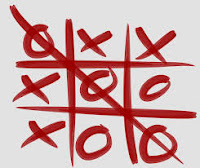
Essentially, for such people, life is always a zero sum game: one does not win unless someone else loses. To them, there is no such thing as a win-win scenario; the opposition must always lose—and to be seen to lose in a big way.

Deserving of the reputation
or not, Napoleon serves as
the poster boy for low self
esteem.
Before I move to my causative premise, I'll cite just one more trait: low self-esteem, a deficit compensated within this group by high levels of braggadocio, exaggerated reactions, self-justifications or even prevarications, or by dramatically associating oneself with some notable person, organization or cause. This is not to say that a person or persons is not intelligent, capable or even above average in relevant skills and knowledge. What it describes, instead, is the inability of that individual to be comfortable and confident in those qualities. Because of that uncertainty, they are governed by the awkward nature of the compensating behaviors.

To a degree, low self esteem is part and parcel in most of the affectations I've mentioned. Even so, I do not mean to suggest that this is an exhaustive list of limiting attributes, but it does point up one further argument that I want to make, that such traits are most likely a product of physiologic components and, as such, are not susceptible to argument or logic.

     Larry, Curly and Moe                Henny Youngman
Consider this example. Between childhood and adulthood, your sense of humor changes. As a young child, if you wanted to tickle your funny bone, you were more likely attuned to visual comedy like cartoons or the Three Stooges. Whereas, having become an adult, you probably prefer stand-up comedians, a style of humor I will sum up, for purposes, in Henny Youngman's classical chestnut, "Take my wife—please!"

The difference is in the format of the humor. The Three Stooges are obvious: pratfalls and head slaps, odd vocalizations and funny faces. Youngman's humor, on the other hand, is relatively sophisticated. In fact, it requires that the listener supply a good portion of the interpretation. First, we have to know that many jokes start with the phrase, take my wife (or kids, boss, mother-in-law, etc.). Second, we have to realize that Henny's pulled a bait-and-switch on us, changing the joke from a standard humorous story to a one-liner all in the space of one word: please. What's entertaining is that we, the listeners, were fooled, not so much by what was said but by the surprise, the twist on our expectations. We have to do some mental processing to appreciate that type of humor.

The humor of the Stooges—we laugh when someone falls down—appeals to what is termed "concrete thinking," the processing of obvious, straightforward information that does not require interpretation or association with other ideas.


In contrast, most stand-up humor depends on "abstract thinking," processing information as it ties into other ideas, often requiring combining concepts to understand a new construct.

In more general terms, abstract thinking allows us to organize, analyze, evaluate, cross reference and utilize information, but it also permits us to form concepts about the nature of things rather than just to think about the things themselves. For instance, abstractly, one would be able to consider the notion of what health actually means in terms of nation building. More concretely, one might only be able to frame health in terms of the cost in dollars.

The thing is, abstract thinking appears to involve the very front of the
brain's frontal lobe. It is the last part of the brain to develop, and that growth can still be going on into a young person's mid-twenties. That area of the brain appears to figure heavily in other guidance and control functions, such as judgment, problem solving, language, impulse control and socialization, among others.

The cluster of issues I've described are readily tracked to specific areas of the brain. And it is my contention that the brains of many of the Retrograde Republicans have notable physical or chemical differences which affect the way they process information and judge their world, differences marking them apart from more mainstream politicos. In effect, they actually see a substantially different—and much more frightening—world. These are a result of physical features, literally organic differences that are not open to modification by persuasion. Attempting to do so would be the same as if you tried to cajole someone into growing taller or changing their eye color. Ain't gonna happen. I see no future in working from that angle.

Christopher Walken (1984)
Nor does it seem possible that any of them will undergo significant personality or behavior changes, at least not over an extended period. Many of these individuals, however, have long been prominent players on a national stage and I would expect most of them to be skilled at displaying behaviors, giving

speeches, holding conversations or making gestures that convey meanings that are, in effect, play acting, showing or telling people whatever is necessary to gain their trust and support. But that's a fairly common politician's skill. Some may even know how to act presidential.

What I want to emphasize, though, is that a leopard, through no fault of its own, really can't change its spots.
= ! =

Monday, February 27, 2017

Anatomy of a Mud Puddle

The 2016 presidential election was the Democrat's to lose. And they did. And now they are standing around, scratching their, uh ... heads, wondering why. And, by all indications from the Democratic National Committee, they've decided that they just need to do more of the same in the future.

That's because they're thinking like the long-term,
New Democratic National
Committee Chair Tom Perez
professional politicians that they are. So they're already preparing a detailed plan to make all the same mistakes again. If it worked in 2008, it ought to work in 2020, right?
~
Here's what happened in 2016:
1. The Democrats presented a candidate who had no charisma and, even worse, she tried to fake it. Meanwhile, Mr. Trump just oozed personality.
2. While Secretary Clinton, just like President Obama, carried all the credentials of a viable candidate, the electorate, in 2016, wasn't checking credentials.
3. There was a bit too much emphasis on Mrs. Clinton's gender as being a good reason to vote for her, introducing a note for which the opposition found an easy counterpoint and one that was discordant for many anti-gender-bias Democrats. If a male candidate was not more qualified by being male, then neither was a female for being female. You can't have it both ways and many were offended at the attempt.
4. Secretary Clinton was carrying a lot of political baggage, some of it for over twenty years. This load included, whether deserved or not, issues associated with the Whitewater controversy, Travelgate, Filegate, a cattle futures controversy, her response to the Lewinsky, Jones, et al scandals, her leadership of the Clinton presidency healthcare effort, as well as Benghazi, the Clinton Foundation and the email servers. Maybe she didn't earn it, but she had an unsavory reputation, nonetheless, that made her especially vulnerable to the negative spin from any opposition.
5. Just like President Obama, the Secretary was a known fellow traveler of the the corporate financial industry, not the most popular group since the 2008 economic debacle.
6. The Democratic platform was the same old thing while the Republican
candidate's platform, though changing hourly and presenting some highly problematic planks, was exciting and newsworthy. Oh, was it newsworthy!
7. The anachronism that is the Electoral College. Once upon a time, when we were much younger, we were the United States of America. However, we became the United States of America on November 19, 1863. Get over it.

Would Senator Sanders have been a more viable candidate? Probably not. He was a bit too fiscally pie-in-the-sky for an electorate still dealing with the aftereffects of the 2008 economic meltdown. Nor would he appear viable in 2020. Besides which, at his age, and as a conscientious worker, he'd likely not survive the rigors of the presidency.

Which Dems might be viable for a 2020 run? I'll limit this list to my preferences (not that I'd wish the top job on any one of them):

Elizabeth Warren, Senator from Massachusetts
 John Hickenlooper, Governor of Colorado

Kirsten Gillibrand, Senator from New York
First Lady Michelle Obama
 Vice President Joe Biden


!

Tuesday, January 24, 2017

Why knot

Perhaps the essential question of the philosophers is, "Why am I here?" Or, writ large, "Why are we here?"

This question has many permutations, for example, What is reality? Or, What is life? What is death? And so forth, in ever more specific or esoteric forms.

But for the past few years, my response to the question, "Why am I here?," has been, Why do you ask?

It is an insidious conceit of human beings that we, either individually or as a species, are somehow important. That our self-awareness is ultimately significant. That human life, in and of itself, is paramount. That we are the preeminent whosis in all of the whatsis. Well, other than our own opinion, who says?

Who says? We have gone so far—in our delusion—as to declare that an all-powerful and perfect Divinity, the existence of which we have absolutely no incontrovertible evidence, has created us in its own likeness.
We have declared that God has declared that we are like God.
Ego much?

Let me propose some alternate questions for the philosophers among us: What works? How can we all get along together? How can we improve the quality of life for all of us? But perhaps the ultimate question is, When?

!

Saturday, November 19, 2016

I embrace my cynicism once more

Recently, I'd felt that doubt had begun to creep into my cynical core beliefs. Now, the 2016 national election in the United States has restored my fundamental assumptions regarding the inability of human beings to act in their own best interests. I include myself, of course. Really. Among other things, my cynicism is a serious flaw.

But back to the election. Two things:

1. People are afraid. People are always afraid of one thing or another: loss of possessions, employment, health, freedom, love or life. Loss of control, mostly. But also afraid of things or people different or unfamiliar. Many would-be leaders exploit those fears to their own ends, amplifying the fears and then suggesting that they alone have all the answers. It's a cheap and easy trick.

2. Very few Americans seem to understand that, when they weaken the rights of others, they weaken their own rights at the same time. Part of the problem is that those folks seem to think it will never happen to them. Famous last words, eh?

Many years ago, a counselor said to me that, "The more insecurity you can live with, the fuller your life will be."

!

Saturday, June 25, 2016

GOPenstein's Monster

The Republicans kept pushing and pushing
the fear-mongering envelope until
finally it ripped apart and out stepped

TA DA

DONALD THE TRUMP! 

Now deal with it.


!

Sunday, December 20, 2015

And the Epitomite goes to ...

The Epitomite,
brainless and heartless.
Congratulations, Donald Trump, for having the gumption to step forward and show everyone just what kind of man you are. You demonstrate the epitome of the brainless, heartless scoundrels for which this generation of the Republican Party has become known.

It is with the utmost feelings of disgust and disdain that I present you with this small token of my disregard, awarded for only the second time: The Epitomite!


Donald Trump, on people of the Muslim faith: Let them eat sand!
!

Friday, May 8, 2015

I myth good ol' evil

Most of what I say in this entry is not original, except that, here, I say it for myself. It's remotely possible that some of my conclusions may be novel, though that hardly seems likely. Still, it's satisfying to say it.


Notions of GOOD and EVIL are purely subjective determinations. In other words, outside of the way most human beings think about things, good and evil do not exist in any form.

Most of us interpret the things we want to happen as good, and the things we don't want to happen as bad. If there is some association we can manufacture between those bad things and some person, group or cause, then the bad things tend to be described as evil. In extreme cases, evil may be personified in a Christian mythological character called Satan.

In point of fact, however, the very same circumstances can be interpreted as either good or bad by different people. For instance, if two people are vying for the same job, only one of them will get that job. The person hired will see it as good, the person not hired will see it as bad. If the one not hired thinks that the other was less worthy and undeserving, then the circumstances begin to smack of evil. If the unsuccessful applicant complains about the unworthiness of the other, and that other hears about it, he or she may begin to think the unsuccessful candidate is evil. Good and evil, like beauty, are in the eye of the beholder.

I'm sure most of us would be able to point to certain people or particular
situations and feel confident in labelling them as good or evil. Well, let's get down to brass tacks: Abraham Lincoln vs. Adolf Hitler.

While the majority of Americans view Lincoln as one of our greatest presidents, it's not a universally held value even today. What's more, about 155 years ago, a goodly portion of our citizenry considered Lincoln the personification of corporate greed, political oppression, militant violence and government-sanctioned terrorism—what most of us would consider evil.

Conversely, around 75 years ago, a large portion of the citizens of Germany (Deutschland) considered Adolf Hitler the heroic leader who would bring them out of the social and economic woes imposed on them by the unjust and repressive Treaty of Versailles and the avaricious influence of a particular ethnic group. For that matter, many American citizens—and not all of them Germans—admired Hitler and what he stood for. Some still do today.

I don't intend to defend or criticise those opinions or the actions of the leaders in question. I only intend to point out that many people can hold opposing views of what is good or evil and hold those differing views in all honesty and sincerity.

Even your run-of-the-mill "bad guy" probably doesn't get up in the morning, rub his hands together and say to himself, "Now, what bad things can I do today?" Much more likely he simply sees circumstances he wants to alter: he wants money, you have money. He may know it's against the law to take it from you, but that's not really his concern. For him, if he has your money it will be a good thing.

In our time, terrorism is often defined as evil. But, as has been pointed out, one man's terrorist is another man's freedom fighter. It would be difficult to find a large religious group whose members, even if a minority, have not perpetrated violence upon so-called non-believers; nor is there any race or ethnic group which has not visited violence on others simply for not being like them. The popular conceit from the view of the perpetrators, however, is that the violence is a good thing. The victim groups have quite the opposite view and tend to think of those same perpetrators as evil.

In a different characterization, people often describe natural events and circumstances as evil. Disease, tsunamis, accidental injuries, famine and various other calamities, cataclysms and catastrophes have been laid on the doorstep of evil. Yet all of these are commonly occurring, natural events that have clearly definable causes. People simply tend to see them as bad; this is not to suggest they are not devastating to those afflicted. Nonetheless, it's still a matter of perspective. If a tsunami floods an uninhabited shore, it's simply a natural phenomenon. If it washes away a town full of people, it's seen as a  terrible disaster. In either case, the tsunami simply is a natural event; it's our subjective experience that imposes a value, not the thing itself.

As to people, they might be stupid, greedy, crazy, misguided or sociopathic, but those, too, are naturally occurring phenomena. To attribute any behavior to evil shows a profound misunderstanding of the human psyche.

To sum up, good and evil only exist as subjective value definitions by human beings; moreover, those definitions are frequently in opposition for the same person, event or circumstances. In our objective reality, good and evil do not exist.

Get over it.
!

Saturday, May 24, 2014

Of witches and other absurdities


Last week, I received a print magazine from a Roman Catholic missionary order with which I have had some past association. It's not a large publication, maybe only 12 or 16 pages, but one of the articles caught my attention.
This article described a recent incident in Papua New Guinea, which has long been a major mission theater for this order of priests and brothers. In particular, it described the ordeal of two women who were accused of witchcraft by relatives of a young man who died. Purportedly, an autopsy was unable to pinpoint the cause of death. Nonetheless, it was claimed that the dead man, after he was dead, used his cell phone to call a relative and complain that the two women had stolen his heart, causing him to die, hence the charge of witchcraft.
Witch ordeal
As a result, the women were captured by a group of men and tortured to make them return the young man's heart. One woman died, though the other, who was pregnant, was able to escape to a neighboring province. There, she spent several weeks in the hospital recovering from burns and other injuries, including the loss of her unborn child.


The incident took place in a community with a large Catholic contingent; the woman, herself, was a baptized Catholic. The Catholic bishops of the region, concerned about a growing tide of sorcery beliefs and violence, even among their congregants, developed a specific, faith-based educational program in an attempt to turn back that tide.

According to the article, one of the major themes of the program was a reminder of the baptismal vows that were customarily renewed by the congregants during the Easter season. Included in that profession of beliefs were statements of the power and goodness of God and of the insidious perfidy of Satan.

At this point in my reading, I was struck by the dichotomy represented by the program's approach. In effect, the Catholic co-religionists were being asked to reject one body of mysticism and to embrace another, the basis for either being, solely, faith.

There was an element of absurdity to that notion that begged me to make one of my increasingly rare entries to my blogs.

The Good SamaritanJacopo Bassano, c. 1562
You know what? If the Catholics or the Mormons, Anglicans, Methodists, Baptists, Witnesses, Adventists or any other Christian or Muslim group wants to help their fellow men, then put down your sacred texts and put aside your proselytizing and pick up a shovel or a trowel. Dig a well, construct a road, put in a sewer. After all, when the Samaritan, in Jesus's parable, came across the injured traveler, he didn't preach to him. Instead, he treated his wounds, carried him to shelter and saw to his care.

Rather than build chapels, basilicas, temples, meeting houses or mosques, spend the money on hospitals, schools, fire stations and water treatment plants.

In other words, put your money where your mouth is.

But that ain't gonna' happen, is it?

And do you know why?

It's because the main function of any organized religion is the aggrandizement of that organization, not the actualization of its sermonized tenets.

!